Views: 0 Author: Site Editor Publish Time: 2026-04-08 Origin: Site


Disinfection robots, care-assist units, rehabilitation devices, companion robots and classroom robots all charge in rooms where people are present. That single fact reshapes the specification: a service robot charger for a hospital corridor or a family living room is judged on touch temperature, acoustic noise, standby behaviour and electromagnetic emissions before anyone looks at charging speed.
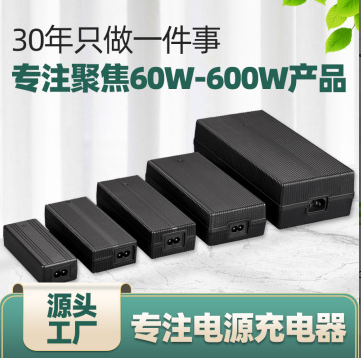
A charger sitting in a rear plant room and a charger sitting in a day room are different products, even when the electrical spec looks identical. In care environments the enclosure is reachable, the room is often quiet, and the equipment around it includes monitoring and therapy devices that must not be disturbed.
Residents, patients and children may touch the housing. That puts constraint on surface temperature, on the integrity of the insulation, and on how the output is isolated from the mains. Purchasing teams in these settings typically ask the robot OEM to define the applicable safety standard for the whole assembly, then require the charger supplier to provide measured data for leakage current, touch temperature and dielectric strength against the relevant limits.
Electromagnetic compatibility stops being a paperwork exercise when a charger shares a room with monitoring equipment. Conducted and radiated emissions need margin against the Class B limits that apply to residential and light-industrial environments, and the unit should be tested rather than assumed compliant. Acoustically, fanless free-air convection cooling keeps the unit silent, which matters for overnight charging in bedrooms and quiet wards.
Care robots usually return to a fixed dock without an operator. The charger therefore has to be safe when nobody is watching: automatic cutoff when the pack is full, a shutoff on no-load, and a timed termination option so a unit left connected over a weekend cannot keep trickling current into a pack that is already charged.
Tip: Ask for a measured touch-temperature figure at maximum ambient, not an ambient-only rating. The number that matters in a care setting is the surface temperature reached during the last hour of a full charge.
Once the safety criteria are settled, the rest of the specification is ordinary power-electronics work — but each item still has a care-setting twist.
Fuyuan platforms cover 8–87 V DC outputs from 60 W up to 10 kW across more than 3,000 developed models, and support lithium-ion, LiFePO4 and lead-acid packs. On robots with a managed battery, the charger has to read the pack's state and follow its current limit rather than impose one, so confirm that the BMS protocol is documented before the design starts.
Plastic housings suit quiet indoor units and can be moulded to a robot's styling; aluminium housings help where heat or mechanical abuse is a factor. Where the dock is wiped down or sits near a wet floor, an IP67 waterproof unit is the safer choice — Fuyuan offers IP67 versions across several power classes, including 60 W, 120 W, 150 W, 250 W, 400 W, 1500 W and 3000 W.
Low-ripple, adjustable output suits robots whose electronics stay powered during charging. Standby consumption is worth checking for a fleet that leaves chargers energised around the clock, and units meeting CEC, DoE Level VI, ErP Stage 2, CoC Tier 2, NRCan or GEMS thresholds are the ones to shortlist for sales into regulated markets.
Tip: Put the charger on a watt-hour meter for a week before committing to a fleet order. Idle draw multiplied across a hundred docks is a measurable utility cost and an easy argument to settle with data.
Care and education buyers tend to audit rather than assume, and that favours suppliers who can produce records quickly.
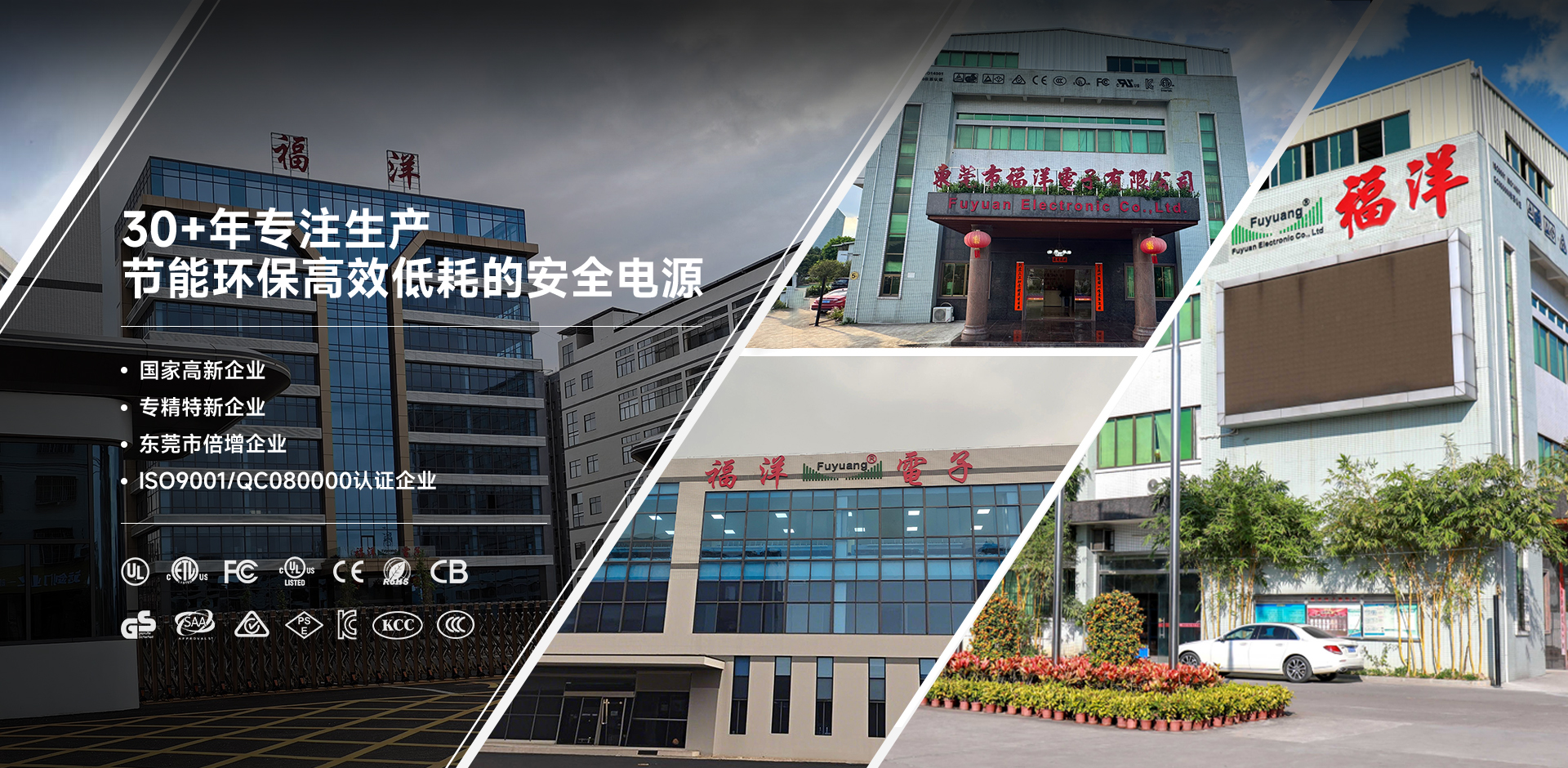
Expect a certificate of conformity for the destination market, EMC and safety test reports, an RoHS and REACH declaration, and a material safety statement confirming flame-retardant, halogen-free construction. Fuyuan holds ISO 9001, ISO 14001, QC 080000 and BSCI, runs a CNAS-standard in-house EMC laboratory, and performs 100% factory inspection with a 4–8 hour full-load burn-in on every unit.
Product approvals cover UL, cUL, ETL, FCC, TUV-GS, CE (EMC and LVD), CB, KC, KCC, PSE, SAA, RCM, UKCA, CCC, NOM, BIS, RoHS and REACH. For a care facility in Europe the working set is usually CE with a CB report; for North America it is UL or ETL; for Korea and Japan, KC and PSE. Certificate numbers are available for verification with the issuing body.
Custom work covers output parameters, interface type, enclosure finish, private labelling and logo printing, with design-to-engineering turnaround as fast as 10 days and a 100-unit MOQ. Every unit carries a 3-year warranty, with MTBF rated at 30,000 hours or more. Payment terms and sample arrangements are set per project by the sales team.
Tip: Order the first batch with the final connector and cable assembly. Changing a connector after the docking station has been tooled costs more than the charger itself.
Chargers for disinfection, care-assist, rehabilitation, companion and education robots are specified around the room they live in: touch-safe surfaces, low acoustic noise, emissions margin against Class B limits and unattended safety functions, then ordinary electrical matching on top. For reliable products and expert support, Fuyuan Electronic offers high-quality service robot chargers engineered for quiet, continuous indoor operation.
A: Suitability depends on the standards the facility and the robot OEM apply to the complete assembly. Chargers are supplied with EMC and safety test reports plus RoHS and REACH declarations so integrators can document measured values for leakage current, touch temperature and emissions against the limits that apply in that setting.
A: Yes. Free-air convection cooling removes the fan entirely, so there is no motor noise and no intake filter to service. Units also support automatic cutoff at full charge and a no-load shutoff.
A: Lithium-ion, LiFePO4 and lead-acid packs, with constant-current/constant-voltage profiles tuned per pack. Where the pack has a BMS, the charger follows the limits it reports.
A: Yes. IP67 versions are available in several power classes, including 60 W, 120 W, 150 W, 250 W, 400 W, 1500 W and 3000 W, in plastic or aluminium housings.
A: MOQ is 100 units. Design-to-engineering work on a custom project can be completed in as little as 10 days. Production lead times, sample policy and payment terms are confirmed by the sales team against the specific configuration.


