Views: 0 Author: Site Editor Publish Time: 2026-03-31 Origin: Site


Robot projects rarely fail because the power supply was too weak. They fail because the charger was specified for the laboratory rather than for the site — a wet floor, a 45 °C ceiling void, a dock that no one re-aligns between shifts. Fuyuan Electronic has supplied robot battery chargers into manufacturing, healthcare, logistics and outdoor applications since 2005, and the pattern is consistent: the electrical specification is the easy part, the deployment environment is where projects need a second look.
The same 48 V lithium pack behaves very differently depending on what surrounds it. Four families of requirements cover most robot deployments.
Welding cells: high ambient temperature, strong electromagnetic fields from the weld current, and short windows between cycles for top-up charging.
Assembly stations: stable output voltage so that sensitive tooling is unaffected, plus multi-bay charging where several units share a station.
Paint and coating lines: sealed enclosures with corrosion-resistant housings, and equipment selected for the area classification of the zone.
Palletising and material handling: kilowatt-class charging with docks sized for continuous operation rather than shift-end refills.
Machine tending: oil mist and swarf in the air, which argues for convection cooling over a fan-assisted design.
Inspection and metrology: low acoustic noise and low electrical noise, since vibration and ripple both show up in measurement data.
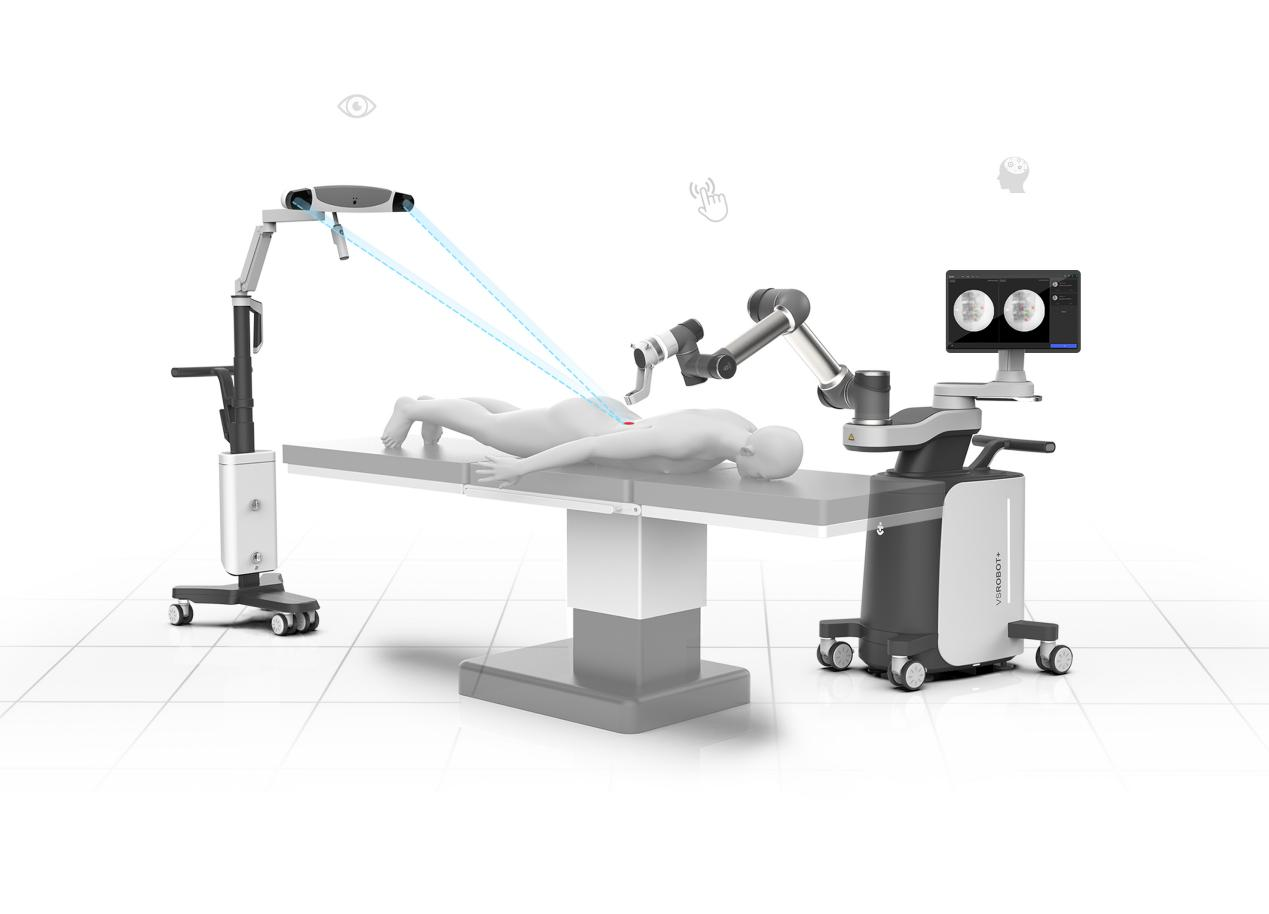
Healthcare deployments are governed by electrical safety rather than convenience. Chargers used on or near patients are typically designed to meet IEC 60601-1 style requirements: reinforced or double insulation, leakage current held to a fraction of a milliamp, isolation barriers, and electromagnetic emissions and immunity tested to the relevant collateral standard so that the charger does not disturb monitoring equipment nearby. Enclosure materials also matter in clinical settings — flame-retardant housings, wipe-down surfaces and rounded edges. Delivery robots add an IP rating for wash-down areas, while surgical and procedure-room equipment usually needs a higher ingress protection class on the mains side.
This group is defined by where the charger sits rather than by what it powers. Cleaning robots return to a base that may be in a hallway or under a counter. Food service units work near steam, oil vapour and frequent floor washing. Guide and reception robots need a dock that fits the public-facing design of the space. Companion and education robots bring the strictest consumer-safety expectations, since children are close to both the robot and its charger. Security and patrol robots run outdoors through the full annual temperature range. The common thread is that the charger becomes part of the product's appearance and its touchable surface, not just its power chain.
Sorting systems: charge cycles in the thousands and tight windows between sortation waves, which makes connector durability a specification item.
Unmanned warehouses: opportunity charging on floor rails or at conveyor-side docks, with scheduling driven by the warehouse control system.
Inventory robots: overnight charging windows in stores, often at higher ambient temperature than the goods aisles.
Vending and delivery units: mains-direct operation with a small buffer pack, charged during off-peak hours.
Underwater, explosive-atmosphere, agricultural and construction deployments push environmental ratings to their limits. Subsea docking needs corrosion-resistant, pressure-tolerant interfaces. Hazardous-area equipment follows the relevant classification and certification regime. Field and orchard robots contend with dust, mud and vibration. Construction sites bring three-phase supply, dust and heavy mechanical shock. In all of these, the charger housing, sealing method and cable entry design do more to determine reliability than the power rating does.
Tip: Write down what touches the charger in service — water, flour dust, chicken fat, salt spray, cleaning chemicals — and treat that list as the primary specification. Ingress protection is chosen from the environment, not from a general preference for a higher number.
IP67 covers immersion and dust-tight sealing and is the right baseline for wash-down, outdoor and humid installations. In practice, achieving it is about the details: double seals at the mating face, potted or conformally coated boards, sealed cable glands and a housing that does not rely on a fan pushing unfiltered air across the electronics. Plastic housings suit lower power and lighter weight; aluminium versions handle higher power and mechanical abuse, and dissipate heat better in hot rooms.
Most mobile robots charge from a single-phase mains feed through an AC inlet — C8, C6 or C14 patterns are the common choices — while large industrial docks and some construction platforms use a three-phase supply. Wide input tolerance matters where sites run on generators or where grid voltage sags during shift changes.
Every docking event wears the interface, so the mating cycle rating belongs in the purchase specification. Self-aligning guides, generous contact wipe and a defined contact resistance limit keep the interface working long enough for the economics of automated charging to hold. In coastal or chemical environments, contact plating choices deserve the same attention as the enclosure.
Tip: Photograph the dock after three months of normal operation. Contact discoloration or a dust film inside the housing tells you more about whether the installation matches its rating than any incoming inspection report will.
Once more than a handful of robots are involved, the charger stops being a component and becomes part of a managed system. A charger that reports state of charge, charge current, pack temperature and cumulative energy can feed a fleet controller directly over CAN 2.0 or RS485, and that data is what makes the difference between reacting to failures and anticipating them.
Live status per vehicle: state of charge, charge power and estimated time to full.
Fault and warning events: over-temperature, interrupted charge, poor contact, communication loss.
Pack health trends: capacity fade, internal resistance drift and cell spread over time.
Energy accounting per vehicle and per shift, for cost allocation and for spotting equipment that has started to draw more than it should.
Three trends tend to appear before a failure. A charge that takes progressively longer for the same energy delivered points to rising internal resistance. A widening spread between cells in a series string points to a cell on its way out. A pack that reaches full charge but delivers fewer hours of work is a capacity problem rather than a charger problem. Each is visible in logged charge data weeks before the robot stops.
Scheduling charging into off-peak electricity windows is straightforward when the charger is network-connected and the fleet has spare capacity in the early hours. The same data feeds sustainability reporting, since charge energy multiplied by the local grid factor gives a defensible emissions figure for a robot fleet — and a way to show the effect of any on-site solar generation.
Tip: Ask for the interface documentation before you buy, not after. A charger that can only export data through a proprietary gateway will constrain how the system grows, while a documented register map over CAN or Modbus-style serial keeps integration options open.
Charging hardware is usually the last item specified and the first item blamed, which is why programme teams increasingly bring the power partner in at concept stage. Fuyuan Electronic, founded in 2005, operates two production bases in Dongguan and Yongzhou covering 108,000 m² with 450 employees, and maintains a CNAS-standard in-house EMC laboratory together with materials testing for RoHS compliance. That combination is what allows certification testing to be prepared for before the design freezes rather than discovered afterwards.
For robot programmes the relevant capability set is fairly specific. More than 3,000 models have been developed across a 60 W to 10 kW range, including GaN and SiC designs at 120 W, 240 W and 330 W with efficiency up to 95%. Adjustable output, low-ripple regulation, PSU-grade protection on both input and output, and optional CAN 2.0 or RS485 interfaces cover most mobile platform requirements, and IP67 versions are available through the range for outdoor and wash-down duty. On the commercial side, OEM and ODM projects run from design to engineering sample in as little as ten days, with a minimum order quantity of 100 units, 4–8 hours of full-load burn-in, 100% factory inspection and a 3-year warranty supported by an MTBF of 30,000 hours or more.
Tip: Bring the charging requirement into the mechanical concept review, not the electrical one. Dock position, cable routing and charger mounting space are decided long before anyone writes a charger specification, and they constrain it more than the power budget does.
Robot charging works when the specification starts from the deployment environment and the fleet's operating rhythm, and treats the electrical figures as one input among several. Enclosure rating, docking durability, communicability and pack-friendly charge profiles decide whether a fleet runs on schedule a year after commissioning. For reliable products and expert support, Fuyuan Electronic offers high-quality robot charging solutions engineered for continuous duty, covering 60 W to 10 kW with IP67 protection, CAN 2.0 and RS485 communication, certification for global markets and a 3-year warranty.
A: It depends on the site. Indoor office and retail installations are usually fine at IP54 or similar, while wash-down areas, kitchens, food plants and any outdoor deployment call for IP67. Confirm the rating by looking at the sealing method, not just the label.
A: Yes. Healthcare deployments follow electrical safety standards such as the IEC 60601 family, which impose stricter limits on leakage current, require isolation between mains and output, and set both emissions and immunity requirements so that the charger does not affect nearby monitoring equipment.
A: Fewer than one per robot in most cases. The number depends on docking time, the charge rate the pack accepts, the spare capacity in the shift pattern and the cost of a vehicle being out of service. Opportunity charging during work windows usually lowers the count further.
A: Yes, where the charger provides a documented serial interface such as CAN 2.0 or RS485. Ask for the register or protocol documentation during the evaluation so integration effort can be estimated properly rather than assumed.
A: A typical OEM or ODM engagement covers charge profile tuning for the chosen cell chemistry, connector and cable assemblies, enclosure and labelling, and preparation of the certification files for the target markets. Fuyuan supports this from a minimum order quantity of 100 units, with design to engineering sample in as little as ten days.


