Views: 0 Author: Site Editor Publish Time: 2026-07-17 Origin: Site


Cleaning robots fail in ways that office equipment never does. Pool cleaners live next to chlorinated spray, commercial scrubbers work in dust and grease, and home sweepers sit in unheated rooms over winter. When a fleet starts reporting premature battery failure, the charger is usually the common factor: terminals corroded by chlorine vapor, air paths packed with dust, or a unit that shuts down in a cold garage. Selecting a cleaning robot charger means deciding how the power supply survives the room the robot works in.
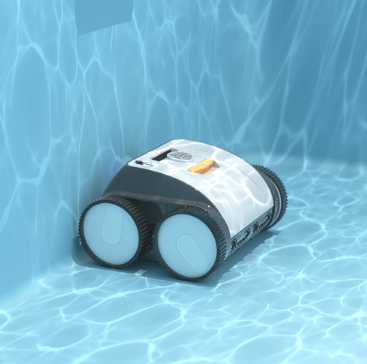
Pool areas are the hardest case. Water evaporates constantly, carrying chlorine with it, and that vapor attacks bare metal terminals long before the electronics themselves fail.
Fuyuan's IP67 charger range uses a one-piece sealed construction: the housing is ultrasonically welded, then filled with high-temperature insulating silicone. Water vapor and corrosive gas have no path to the board, and a short immersion does not reach the circuitry. IP67 construction is also available across the wider platform, from portable 60 W units up to 1,500 W and 3,000 W models for larger equipment.
Sealing only helps if the enclosure itself lasts. Housings are molded from UV-stable, flame-retardant polycarbonate, so a charger left beside a pool or on a sunlit deck does not crack or chalk. Charging contacts are gold-plated and thickened at the wear points, which keeps contact resistance low after hundreds of mating cycles in humid air.
Tip: Match the enclosure rating to the room, not the catalogue. IP67 is justified for pool decks and wash-down areas; a dry retail aisle does not need it.
Commercial scrubbers and warehouse sweepers work in air that is thick with fine dust. That dust enters through cooling gaps, settles on the board and eventually blocks the airflow path, which raises internal temperature and shortens component life.
Fuyuan commercial-grade units use a dual-layer dust grille that blocks particles while keeping convection cooling intact, and the internal board carries a conformal coating that resists oil mist and dust adhesion. Free-air convection cooling means no fan and no bearing to wear out, which matters in equipment that runs unattended. A unit working in a food-processing plant or a dusty warehouse keeps the same electrical behavior as one in a showroom.
Cold floors are the second environmental risk. Chargers in the standard range operate from −29 °C to +45.5 °C, with storage rated from −40 °C to +75 °C. A sweeper parked in an underground garage in winter charges on its normal schedule, without the power collapse that cheap units show at low temperature. Aluminum housings are an option where heat dissipation or impact resistance matters more than weight.
Tip: Ask for the low-temperature current rating, not just the temperature range. Some chargers start in cold conditions and then deliver a fraction of their rated current.
Cleaning equipment is split across battery types. Home sweepers mostly use NMC packs, large commercial scrubbers often use lithium iron phosphate, and older floor machines still use lead-acid. Mixing chargers between those groups is a common cause of short pack life.
Fuyuan develops distinct charging programs for lithium-ion, LFP and lead-acid packs, each with its own CC-CV staging, cutoff point and current ceiling. Cell voltage and temperature are monitored throughout, small packs are protected from high current, and large packs still reach full charge in a reasonable window. Chargers also detect battery voltage and polarity automatically, lock the charging current, and stop charging when the pack is full.
Every cleaning robot charger carries multiple hardware protections: overvoltage, overcurrent, short circuit, overload, over-temperature, reverse polarity, fire-resistant construction and electric shock protection. Fuses sit on both the input and output side. If a robot is flooded or wired incorrectly, output is cut within a fraction of a second rather than waiting on firmware. CAN 2.0 and RS485 interfaces are available where the robot needs to report charge state back to a dock or fleet management system.
The platform is covered by UL, cUL, ETL, FCC, TUV-GS, CE (EMC and LVD), CB, KC, KCC, PSE, SAA, RCM, UKCA, CCC, NOM and BIS certifications, with RoHS and REACH documentation. Each unit goes through 4 to 8 hours of full-load burn-in and 100% factory inspection, backed by MTBF of 30,000 hours or more and a 3-year warranty.
Tip: List the exact battery chemistry and pack capacity for each robot model. Charger firmware variants cost nothing at the design stage.
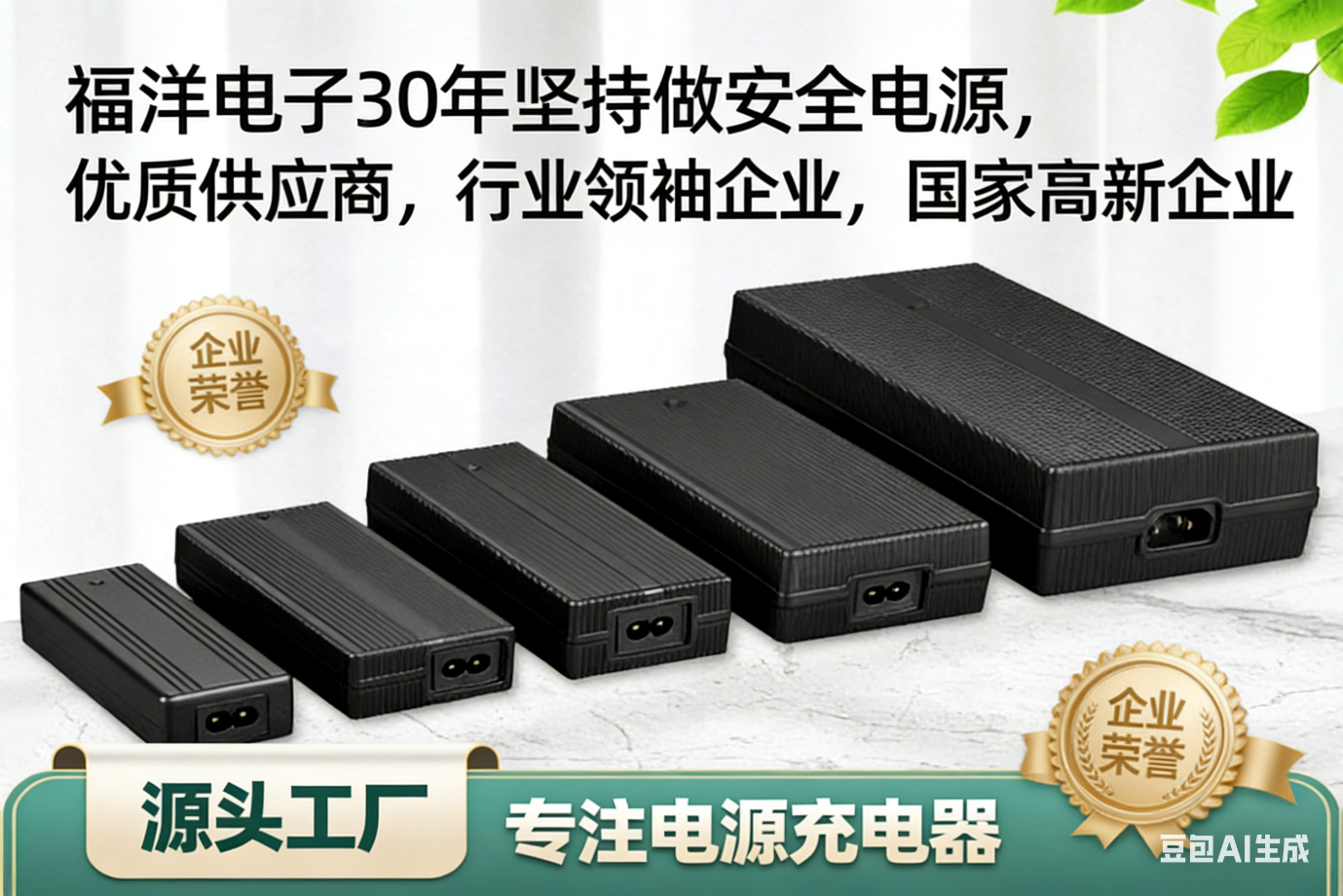
Robot docks are designed around tight spaces, so a standard charger box is rarely a drop-in fit. Fuyuan designs enclosures around the robot's shape and charging interface, then runs samples through reliability testing before mass production. Prototype and production orders are accepted from 100 units, with design-to-engineering cycles running as fast as 10 days. The company's two production bases in Dongguan and Yongzhou, Hunan, cover 108,000 m² and employ 450 people, which supports both sample builds and volume shipments.
Tip: Send the dock drawing and the mating connector with the sample request. Enclosure changes are the part of a charger project most likely to need a second prototype.
Cleaning robots are judged on uptime, and uptime starts at the charging contacts. Sealed IP67 construction handles chlorinated air, dust grilles and conformal coating handle commercial floors, and a wide temperature range keeps winter garages from turning into a maintenance queue. Chemistry-specific charging programs — for NMC, LFP and lead-acid packs alike — keep the battery working as designed; where the equipment uses an LiFePO4 battery charger profile, that program is set separately from a lithium-ion unit. For reliable products and expert support, Fuyuan Electronic offers high-quality cleaning robot chargers built for wet, dusty and cold environments, with custom enclosures and a 3-year warranty.
A: Where the charger sits near a pool, yes. Chlorine vapor attacks terminals and PCB traces even when the unit is never submerged. IP67 sealing with a welded housing and silicone encapsulation is the practical way to keep humidity out over years of service.
A: Look for a charger with a dust grille rather than open vents, a coated board and convection cooling without a fan. Fans draw dust through the enclosure and are the first component to fail in that environment.
A: Fuyuan's standard range operates from −29 °C to +45.5 °C and stores from −40 °C to +75 °C, which covers unheated garages, outdoor docks and warm plant rooms. Check the current rating at the low end of that range, not just the range itself.
A: One hardware platform can, through separate firmware programs for lithium-ion, lithium iron phosphate and lead-acid packs. The charge curve and cutoff must differ between them, so the variants are managed as distinct settings rather than one universal profile.
A: Overvoltage, overcurrent, short circuit, overload, over-temperature, reverse polarity and electric shock protection, with fuses on both input and output. For unattended docking stations, automatic detection of battery voltage and polarity is worth adding as well.


