Views: 0 Author: Site Editor Publish Time: 2026-03-23 Origin: Site


Education robots are the one product category where the charger is touched by children as often as the robot itself. Schools and parents ask three practical questions before anything else: can a child get a shock from it, does it smell or get hot, and will it make noise while a class is working? An education robot charger that answers those questions well is doing more than meeting a specification — it is removing the reasons a school says no.
Consumer chargers are engineered around an adult who reads the label. A charger used in a school or a family home has to assume the opposite: the cable will be pulled, the connector will be probed, and the unit will sit on a carpet with nothing around it for airflow.
The starting point is construction class. A charger with Class II, double-insulated design has no protective earth connection and no exposed conductive part that can reach mains potential, which removes the most direct path to a shock. The output side should be low voltage by design — 12 V or 24 V on most education and companion platforms — and the connector should be recessed so that a finger, a pen or a paper clip cannot bridge the contacts. Leakage current in this class of product is measured against the limits set for household chargers, and a well-built unit sits far below them.
Odour is the first thing a teacher notices and the hardest thing to argue away. It usually comes from recycled plastic or from a housing that was never specified for the temperature it reaches. Flame-retardant, low-outgassing engineering plastics that comply with RoHS and REACH remove both the smell and the substance of the complaint, and they matter most in a closed classroom or a bedroom. Enclosure temperature is part of the same question: a surface that stays comfortably warm rather than hot is a design outcome, not a coincidence.
Fan-cooled chargers announce themselves. In a room where thirty children are working with robots, a whining fan on the shelf is a persistent distraction, and in a home it is a reason to move the charger somewhere inconvenient. Convection cooling removes the fan entirely — no bearing noise, no dust pulled into the housing, and one fewer mechanical part to fail. The trade-off is that the enclosure must be sized to dissipate heat passively, which is a case-area decision rather than an electronics one.
A charger is a switching power supply, and every switching supply radiates something. In a classroom the practical concern is interference rather than health claims: wireless microphones, tablets, Wi-Fi access points and audio equipment all share the room. Designing for low conducted and radiated emissions, and testing both emissions and immunity, is what keeps a charger from degrading everything else on the same bench.
Tip: Ask to see the EMC test report, not just a compliance statement. The report shows which standard was applied and at what distance the radiated measurements were taken, which is what a school's technical advisor will ask about.
Hardware only covers part of the risk. Most incidents in schools trace back to how the equipment is used rather than to the charger itself.
Charge as a supervised activity. A central charging tray or cabinet, loaded once at the end of a lesson with an adult present, avoids unsupervised handling of cables.
Keep cables off walking routes. Reinforced cable entries and strain relief at the charger end survive being tripped over; a plug that has been dragged off a desk usually falls on the connector.
Inspect cables and connectors every term. A cable with visible damage should be replaced rather than taped, and a hot connector after charging indicates contact resistance that will only increase.
Do not charge in sleeping areas overnight. Timed charging and automatic cutoff limit the time a pack spends at full charge, but the simple practice of charging outside bedrooms removes the scenario entirely.
Match the charger to the robot. A higher-current charger used on a pack that was not designed for it will heat the cells and shorten their life, whatever its safety certification says.
Tip: Put a small label with the charger model number next to each charging point. Schools that own several robot generations lose track of which supply belongs to which unit, and mismatched charging is the most common avoidable fault.
For a school, an education authority or a distributor bidding into a framework, the paperwork carries almost as much weight as the product. Relevant approvals for a charger in this category include UL, cUL or ETL for North America, CE marking under the EMC and Low Voltage Directives for Europe, TUV-GS and CB reports where buyers request them, plus UKCA, PSE, KC, SAA and RCM in their respective markets. RoHS and REACH declarations cover the material side, and a declared MTBF figure and warranty term indicate how the manufacturer expects the unit to behave over a multi-year school replacement cycle.
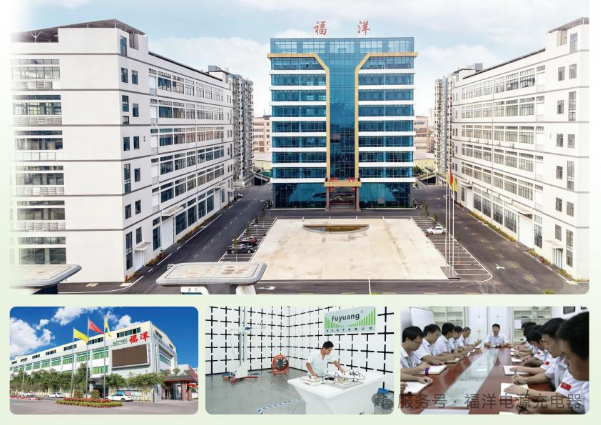
Fuyuan Electronic builds chargers and power supplies from 60 W to 10 kW and has developed more than 3,000 models, with a CNAS-standard in-house EMC laboratory used to test designs before they go to external certification bodies. Products carry a 3-year warranty, an MTBF of 30,000 hours or more, 4–8 hours of full-load burn-in and 100% factory inspection — the last of which is a testing action rather than a defect-rate claim, and the one that most reliably removes infant-mortality failures from a school rollout.
Tip: When a tender asks for safety documentation, supply the certificate for the exact model being shipped together with its EMC report. Bundles that mix certificates from a family of similar models tend to come back with questions during evaluation.
Child-facing charging is not a harder engineering problem than industrial charging; it is a different one. Double-insulated construction, protected low-voltage output, low-emission materials, fanless cooling and tested emissions cover the questions that parents, teachers and procurement officers actually raise. Get those right and the charger stops being the part of the product that generates complaints. For reliable products and expert support, Fuyuan Electronic offers high-quality chargers for education, companion and service robots, engineered with touch-safe low-voltage outputs, fanless thermal design and full certification for global education markets.
A: The risk is designed out rather than managed. A double-insulated, Class II charger has no exposed part connected to mains, and the robot side runs at low voltage with a recessed connector that is difficult to bridge with a finger or a small object.
A: Odour usually comes from low-grade housing plastics or from components running hotter than intended. Flame-retardant, RoHS and REACH compliant materials with low outgassing, combined with a properly sized passive thermal design, remove the cause rather than mask it.
A: Yes. Convection cooling eliminates fan and bearing noise entirely, leaving only a faint switching hum under load. The constraint is enclosure size, since the case has to dissipate heat without help from forced air.
A: The standards family is largely the same, covering electrical safety, EMC and material compliance, but the target markets differ. UL, cUL or ETL cover North America, CE covers the European Union, and UKCA, PSE, KC, SAA and RCM apply in their respective regions. Buyers in education procurement frequently ask for the EMC report alongside the safety certificate.
A: It is not necessary. Timed charging and automatic cutoff protect the pack when a charger is left connected, but a supervised daytime charge keeps cables out of unsupervised hands and avoids spending long periods at full charge, which is gentler on lithium cells.


