Views: 0 Author: Site Editor Publish Time: 2026-04-01 Origin: Site


Two e-bike chargers with the same wattage can behave completely differently on the same pack. Choosing well means comparing a e-bike battery charger on voltage window, charge profile, thermal design and the certificates that clear customs — not on the number printed on the label.
This guide walks through the comparisons worth making before an order, whether the charger is going onto a commuter bike, a cargo platform or a shared fleet.
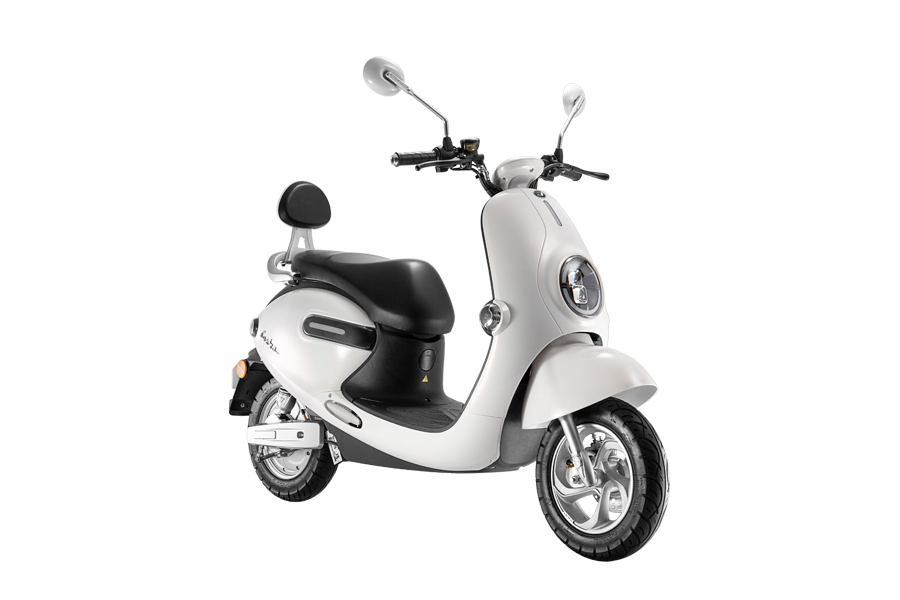
The pack dictates almost every meaningful requirement. Nominal voltage fixes the output window, chemistry fixes the charge profile, and the BMS — if there is one — fixes how much the charger is allowed to decide.
Lithium-ion packs on e-bikes and scooters commonly sit on 24 V, 36 V, 48 V or higher platforms, and the charger must reach the pack's full-charge voltage with enough headroom for regulation. LiFePO4 packs want a different termination point and a gentler tail than lithium-ion, while lead-acid still appears in low-cost commuter models and needs a multi-stage profile. Fuyuan chargers cover 8–87 V DC outputs and support lithium-ion, LiFePO4 and lead-acid packs, which means one platform family can serve several product lines.
Current decides charge time; the profile decides pack life. Constant-current/constant-voltage charging with a properly terminated constant-voltage phase is the baseline, and the current limit should sit at or below the figure the cell supplier publishes. A charger that can be configured to a lower current is useful when the same platform serves both a fast-charge commuter model and a pack that needs a gentler routine.
Charging ports are not standardised across the industry. Some packs expose a simple two-wire input; others expect a handshake before current flows. Fuyuan ships 35 DC plug options — including XT60, XT90, Anderson, DIN, aviation and barrel types — plus 15 AC plug variants, which reduces the need for adapters in the field.
Tip: Send the battery datasheet and the port photo with the RFQ. Connector mismatches cause more returns than electrical faults.
Efficiency is the quiet differentiator. A charger running at 95% wastes far less energy as heat than one at 88%, and on a shared fleet with units running for hours a day, that gap appears on the energy bill.
Typical application | Power band | What to compare |
|---|---|---|
Commuter and light e-bikes | 60 W – 80 W | Plug-in or desktop formats, 90–92% efficiency, compact size |
Mid-range models | 120 W – 160 W | Slim housings, DC-DC (12–30 V input) variants, dual-output options |
Cargo and high-capacity packs | 200 W – 400 W | 94–95% efficiency, current headroom, free-air cooling clearance |
Outdoor and fleet charging | 400 W – 3000 W | IP67 options; 3000 W unit at 35–87 V, up to 35 A |
Fanless free-air convection cooling removes the noise and the filter, both of which matter for chargers installed indoors or in a workshop. Fuyuan chargers use natural convection throughout the range, and GaN/SiC models at 120 W, 240 W and 330 W reach up to 95% efficiency, which reduces the heat the enclosure must shed. Compare the mounting clearance each design requires before committing to an installation position.
For markets with efficiency regulation, the charger should reference CEC, DoE Level VI, Energy Star, ErP Stage 2, CoC Tier 2, NRCan or GEMS as applicable. These are the standards that determine whether a model can be sold in a given region without redesign.
Tip: Compare chargers at their real operating point, not at peak efficiency. A unit that holds efficiency near full load is worth more than one that peaks briefly and falls away.
The baseline set is short circuit, overcurrent, overvoltage, over-temperature and reverse polarity, with automatic cutoff at full charge and an optional charge timer. Two further details separate careful designs: fuses on both the input and output side, and a no-load shutoff. Fuyuan chargers include these across the range, with operating temperatures from −29 °C to +45.5 °C and storage from −40 °C to +75 °C.
North America: UL, cUL, ETL, FCC. Europe: CE (EMC and LVD), TUV-GS, CB. United Kingdom: UKCA. Japan: PSE. Korea: KC and KCC. Australia and New Zealand: SAA and RCM. China: CCC. India: BIS. Mexico: NOM. Add RoHS and REACH for restricted substances. Ask for the certificate numbers and verify them with the issuing body.
Chargers left on a balcony, in a shed or at a shared outdoor rack need more than a splash rating. IP67 units are available across the range, in plastic or aluminium housings, with the 3000 W IP67 model suited to heavy electric equipment running at up to 35 A. For high-usage fleets, a waterproof charger is often cheaper than replacing units twice a year.
Tip: If the charger will be plugged in outdoors, specify the AC plug type for the market as well as the DC connector. Both ends of the cable cause field failures.
Once the electrical specification is settled, the remaining comparison is factory capability and after-sales support. Fuyuan was founded in 2005 and operates two production bases — Dongguan and Yongzhou in Hunan — covering 108,000 m² with 450 employees, plus a CNAS-standard in-house EMC laboratory. Quality control includes 100% factory inspection and a 4–8 hour full-load burn-in, with MTBF rated at 30,000 hours or more and a 3-year warranty.
Customisation covers output parameters, connector selection, housing type, private labelling and logo printing, with OEM/ODM projects starting at 100 units and design-to-engineering turnaround as fast as 10 days. Systems certification includes ISO 9001, ISO 14001, QC 080000 and BSCI, and models developed across the range now exceed 3,000. Sample arrangements, payment terms and production lead times are confirmed by the sales team for each project.
Compare chargers on four things: whether the profile suits the pack, whether efficiency holds under real load, whether the protection and certification set clears the destination market, and whether the supplier can support the product after delivery. For reliable products and expert support, Fuyuan Electronic offers high-quality e-bike battery chargers engineered for daily commuting, cargo platforms and shared fleets.
A: Match the charger's voltage window and current limit to the pack datasheet, confirm the connector type, and check that the charge profile suits the chemistry. Fuyuan platforms cover 8–87 V DC with lithium-ion, LiFePO4 and lead-acid support.
A: Only if the pack can accept the current and the schedule needs it. Charging above the cell supplier's recommended current shortens pack life, and an oversized unit running at partial load costs more without finishing sooner.
A: If the charger is stored or used outdoors, in a wet shed or at a shared rack, yes. IP67 versions are available across the range from 60 W to 3000 W in plastic or aluminium housings.
A: Those required by the market where the bike is sold — UL, ETL or FCC for North America; CE with a CB report for Europe; UKCA for the United Kingdom; PSE for Japan; KC for Korea; SAA and RCM for Australia and New Zealand; CCC for China; BIS for India; NOM for Mexico — plus RoHS and REACH.
A: Yes. OEM/ODM projects support custom output parameters, connectors, enclosure finish, private labelling and logo printing, starting at a 100-unit MOQ with design-to-engineering turnaround as fast as 10 days. Sample and payment terms are set by the sales team.


