Views: 0 Author: Site Editor Publish Time: 2026-07-10 Origin: Site


A survey-grade UAV flying five sorties a day spends nearly as much time on the ground as it does in the air, and most of that ground time is spent waiting on a charger. Crews doing power-line inspection, crop spraying or topographic mapping rarely have a clean 40 A feed and a heated hangar; they have a vehicle, a generator and a fixed number of daylight hours. A drone battery charger specified for that environment has to pull high current from unstable input, keep the pack inside its safe window in cold air, and cover several airframes from one box.
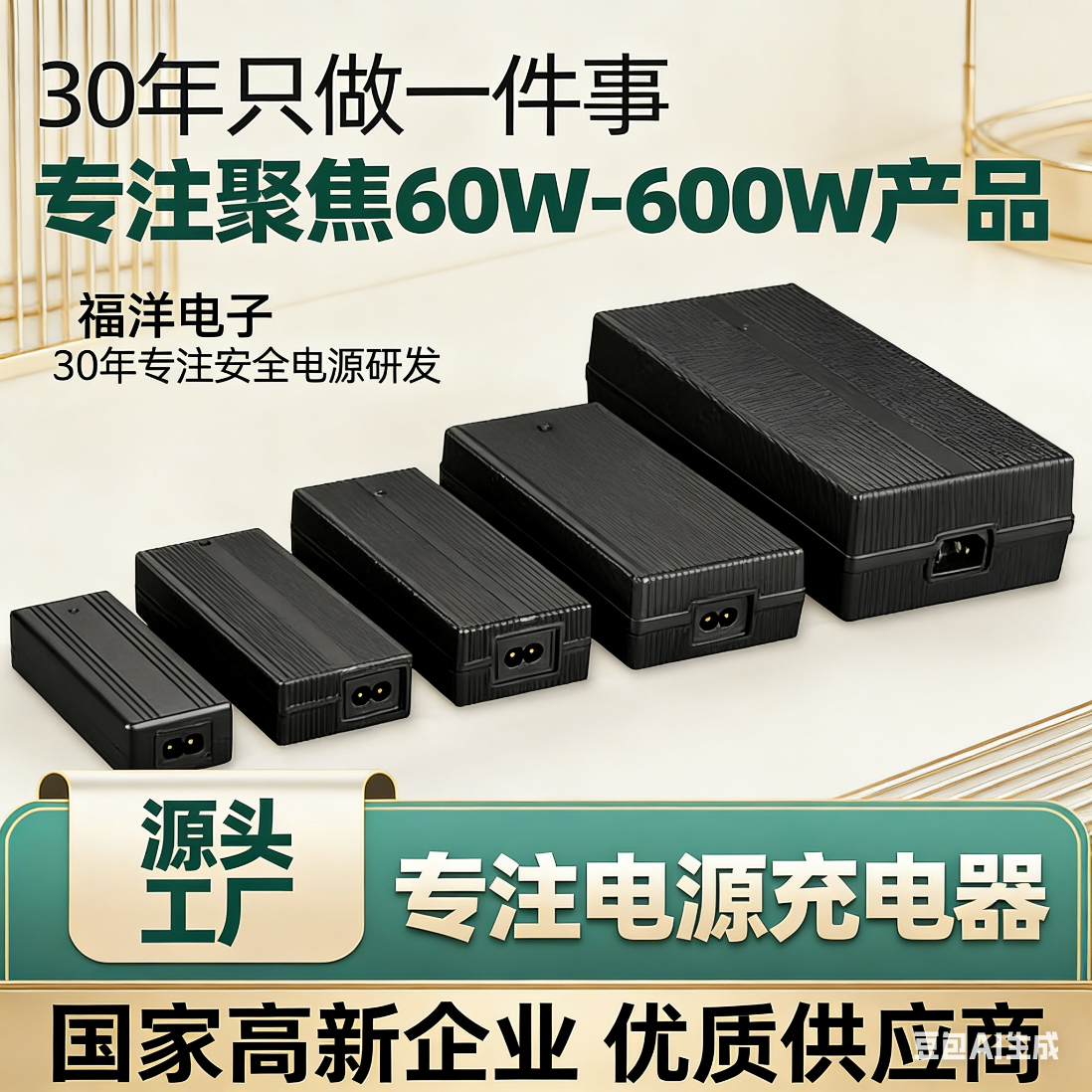
Three constraints separate field charging from bench charging: input power is dirty, ambient temperature swings widely, and the equipment has to fit in a truck. A charger that ignores any one of them ends up either derated to a trickle or sitting in the repair queue.
Portable generators sag on start-up, and vehicle inverters carry harmonic content that a desktop adapter never sees. Fuyuan units carry fuses on both the input and the output side, and the input filter is sized for conducted and radiated noise instead of for a laboratory socket. Surge and ESD testing happens in-house, so a charger leaves the factory having already met the transient conditions it will meet on a tailgate.
Filtering cuts both ways. A charger that pushes noise back onto the vehicle's 12 V rail can disturb telemetry, gimbal electronics or a payload computer sharing that supply, which shows up as intermittent faults that crews blame on the airframe.
Lithium cells will not accept full current near freezing, so a charger that applies its rated output regardless either hits a protective cutoff or stresses the anode. Charger-side temperature sensing lets output taper until cells are inside the accept window. Units in the range operate from -29 °C to +45.5 °C and survive storage from -40 °C to +75 °C, which covers a charger left in a truck overnight in winter.
Inspection teams typically fly two or three airframes with different pack voltages and charge connectors. Output is adjustable across 8–87 V, and the connector catalogue runs to 35 DC plug types, including XT60, XT90, aviation plugs, Anderson, DIN and alligator clips. Multi-bay cradles let a crew refill four packs during one break instead of rotating batteries through a single socket.
Tip: Size the charger around the worst input you will actually meet. If the generator is undersized, the charger's input range — not the pack — sets how fast batteries come back.
Charge current is only half of the specification. What the charger does over the final 20% of a cycle decides how many cycles the pack survives, and 4.2 V-class Li-ion and 3.65 V-class LiFePO4 packs need different finish behaviour.
A CC-CV charger for Li-ion has to enter constant voltage early enough that the highest cell in the string never overshoots its limit, which matters most when packs arrive from the field out of balance. LiFePO4 packs hold voltage far flatter, so the constant-current phase runs longer and the constant-voltage phase shorter. Applying a Li-ion profile to an iron-phosphate pack under-charges it; applying a LiFePO4 profile to a Li-ion pack stresses it. Both program families are selectable, and moving between them is a firmware change rather than a hardware change — see the LiFePO4 battery charger range for the iron-phosphate side of the line.
High current in a small enclosure is a thermal problem before it is an electrical one. GaN/SiC platforms at 120 W, 240 W and 330 W reach up to 95% efficiency, so less input power turns into heat inside the box and more of it reaches the pack. Free-air convection cooling keeps fans out of the design entirely, which leaves nothing to clog with dust or crop spray.
Tip: Ask for the charge profile in writing, not just the current rating. Two chargers rated at 20 A can behave very differently over the last fifth of a cycle.
Rain, dust and vibration are routine conditions in field work rather than exceptions, and they attack different parts of the charger.
IP67 units are sealed against dust ingress and against temporary immersion, which covers dew, spray and a charger left out overnight on a wet tailgate. Sealed models use potted or gasketed construction with gold-plated contacts; plated contacts resist the sulphide and chloride films that push contact resistance up over a season of outdoor use.
A truck bed is a continuous vibration test. Winding retention, connector locking and enclosure mounting are the parts that let go first, so reinforced internal structures matter more than a thicker lid. Every unit is 100% factory inspected with 4–8 hours of full-load burn-in before shipment, and MTBF is rated at ≥ 30,000 hours.
Tip: If the charger rides in the same case as the airframes, plan the mounting. A loose enclosure in a tool box takes more shock than the aircraft it charges.
A UAV maker choosing a charger supplier is usually making a five-year decision. The questions that decide it are whether the supplier can hold a specification, adapt the housing to an existing battery bay, and produce the certification file for every market the airframe is sold into.
Design work starts from the airframe, not from a catalogue part. Output voltage, connector type, cable length, enclosure shape and mounting points are set per programme, with design-to-engineering turnaround as fast as 10 days. MOQ starts at 100 units, and OEM/ODM work covers private labelling and logo printing for brands that sell under their own name.
The certification set covers UL, cUL, ETL, FCC, TUV-GS, CE (EMC & LVD), CB, KC, KCC, PSE, SAA, RCM, UKCA, CCC, NOM, BIS, RoHS and REACH, matched to the markets the airframe ships to. Fuyuan is a National High-Tech Enterprise founded in 2005, running two production bases in Dongguan and Yongzhou, Hunan, across 108,000 m² with 450 employees and ISO9001, ISO14001, QC080000 and BSCI certification. In-house EMC testing to CNAS standards shortens the certification path because pre-compliance work is finished before a unit reaches a third-party lab. The product range runs from 60 W to 10 kW across 3,000+ developed models, and every charger carries a 3-year warranty.
Tip: Send the battery management system specification with the enquiry. Charge profile, connector and certification set all follow from it, and it removes a revision cycle from the schedule.
Field charging is a systems problem: input quality, cell temperature, chemistry and connector logistics all land on the same box. Specify the input range and the charge profile first, then seal for the weather you expect and standardise connectors so one charger covers the fleet. For reliable products and expert support, Fuyuan Electronic offers high-quality drone battery chargers engineered for field duty.
A: Yes, where the output voltage windows overlap. The two profile families are selected in firmware, so a single hardware platform can cover mixed fleets without a second spare part in the tool box.
A: Most airframe packs accept 0.5C to 1C comfortably, so a 16 Ah pack is usually charged between 8 A and 16 A. Choose the upper end only if the pack's BMS allows it and the charger can hold current through the constant-current phase without derating.
A: IP67 sealed models are available for outdoor and vehicle-mounted use, with potted construction and gold-plated output contacts. They are rated for dust and temporary immersion rather than for continuous submersion.
A: MOQ is 100 units, with OEM/ODM support for custom enclosures, connectors, cable lengths and labelling.
A: UL, cUL, ETL, FCC, TUV-GS, CE (EMC & LVD), CB, KC, KCC, PSE, SAA, RCM, UKCA, CCC, NOM, BIS, RoHS and REACH. The applicable set depends on the destination market for the airframe.


