Views: 0 Author: Site Editor Publish Time: 2026-04-08 Origin: Site


A delivery robot that returns to its dock with 22% charge has to be back on the floor before the lunch rush starts, and the delivery robot charger decides whether that happens. Deployment numbers in chain restaurants, staff canteens and hotel dining rooms keep rising, and the operational bottleneck is rarely navigation — it is how quickly and how safely a pack can be replenished between service peaks.
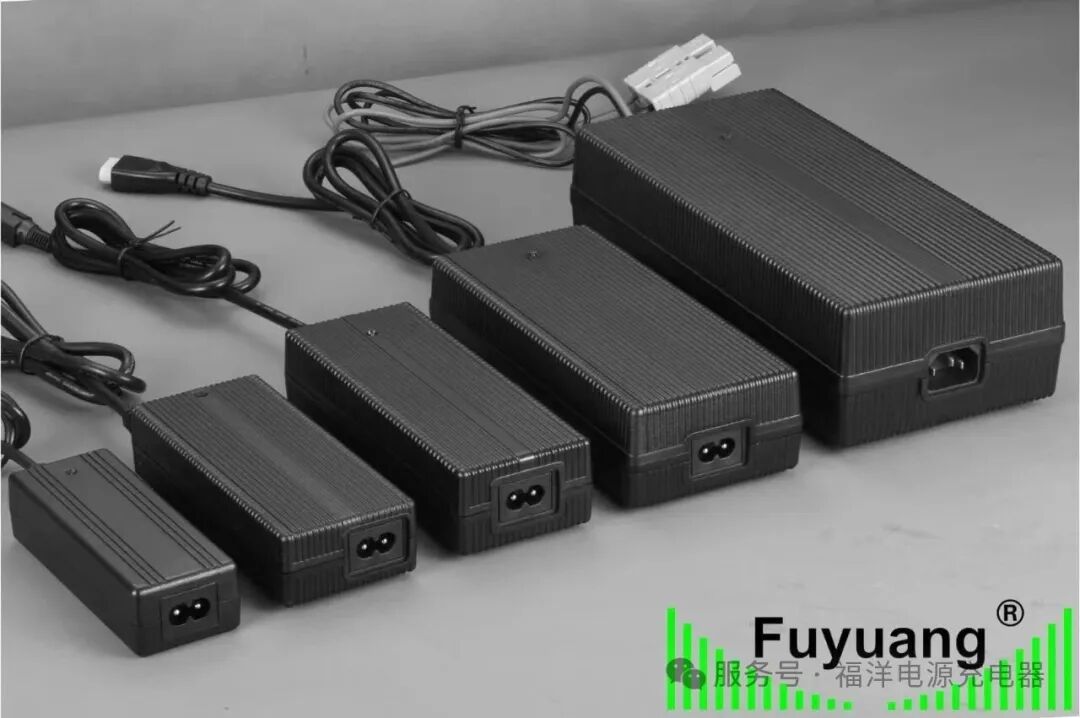
A delivery robot is a service asset with a short, predictable working day. Its charger has to turn grid power into a pack-appropriate charge curve, keep the process safe in a room full of staff and guests, and fit the operating rhythm of a kitchen rather than the other way round.
Charge speed determines the share of the day a robot is actually earning. A charger that fills the pack inside the gap between service peaks keeps the unit available for the next rush; one that needs a two-hour window pushes the robot to the margins of the schedule. Efficiency compounds the effect, since charger losses show up on the restaurant's electricity bill and as heat in a space that is already warm.
Charging points sit in back-of-house corridors or near tables, so the unit must behave safely without supervision: overcharge protection, short-circuit and over-temperature safeguards, an automatic cutoff at full charge, and a housing that stays at a safe touch temperature. Fuyuan chargers carry this protection set as standard, with fuses on both input and output so a battery-side fault cannot reach the mains.
A chain rarely standardises on a single robot model. Chargers therefore need to accept lithium-ion, LiFePO4 and lead-acid packs and to work with the private charging protocols robot makers use. Fuyuan addresses this with a 8–87 V DC output window across the range and configurable current limits, so one platform can be adapted to several robot families instead of requiring a separate design for each.
Tip: List every robot model in the fleet before the first order. Designing one charger platform that covers all of them is usually cheaper than maintaining three separate spares inventories.
Three approaches dominate commercial food-service deployments, and the choice drives the rest of the specification.
Metal contacts or a standard connector transfer energy directly. Losses are low, the electronics are simple, and the technology is well understood — which is why it remains the default for commercial robots. The engineering effort goes into contact geometry and plating so that hundreds of docking cycles do not create resistance or arcing. Constant-current/constant-voltage profiles with tight regulation suit lithium-ion and LiFePO4 packs particularly well here.
Inductive pads remove mechanical wear and tolerate loose alignment, which helps where robots dock themselves under tables or in tight alcoves. Efficiency is lower than a direct connection and the coil gap has to be controlled, so it suits premium installations where appearance and low maintenance outweigh a longer charge time. Customisable converter stages make this practical to integrate.
For high-volume canteens, swapping a depleted pack for a charged one removes the robot from the floor for minutes rather than hours. Swap systems shift the requirement onto the charger: it now has to refill several packs quickly, often on a shelf or in a cabinet, so higher-power multi-output units earn their place here.
Tip: Prototype the full dock — charger, contacts, cable route and ventilation — with one robot before rolling it out. Most failures in the field trace back to the docking interface rather than the power stage.
Choosing a charger is half the work; siting it and scheduling around it is the other half.
Keep docks out of the service path but close to where robots idle. Units are compact enough to mount in a corner or next to a service entrance, and a low-noise, fanless design avoids adding to kitchen noise. In wet or greasy zones, Fuyuan's IP67 waterproof range covers 60 W to 3000 W so the charger can be installed where hosing or splashes are routine.
The practical rule is to recharge during gaps and finish before the peak, not during it. Staggering docks avoids a synchronised power draw that can trip a shared circuit, and chargers with CAN 2.0 or RS485 interfaces can report state so a supervisor knows which robot is ready before opening hours.
Application | Power band | Notes |
|---|---|---|
Light service robots, desktop docks | 60 W – 80 W | Plug-in or desktop formats, 8–87 V DC output |
Mid-size robots, compact docks | 120 W – 200 W | Slim housings and DC-DC (12–30 V) variants available |
Multi-robot docks | 160 W – 400 W | Dual and multi-output channels; IP67 options |
High-volume canteens, swap stations | 600 W – 3000 W | Up to 95% efficiency; 3000 W IP67 unit at 35 V / 35 A max |
Tip: Size the mains circuit for the dock's worst case, not the average. A small restaurant panel can be the real limit on how many robots charge at once.
For buyers exporting equipment, the certificate set should match the destination market: CCC for China; UL, cUL, ETL and FCC for North America; CE (EMC and LVD), TUV-GS and CB for Europe; UKCA for the United Kingdom; PSE for Japan; KC and KCC for Korea; SAA and RCM for Australia and New Zealand; BIS for India; NOM for Mexico. RoHS and REACH cover restricted substances, and Fuyuan holds ISO 9001, ISO 14001, QC 080000 and BSCI for factory-level audits.
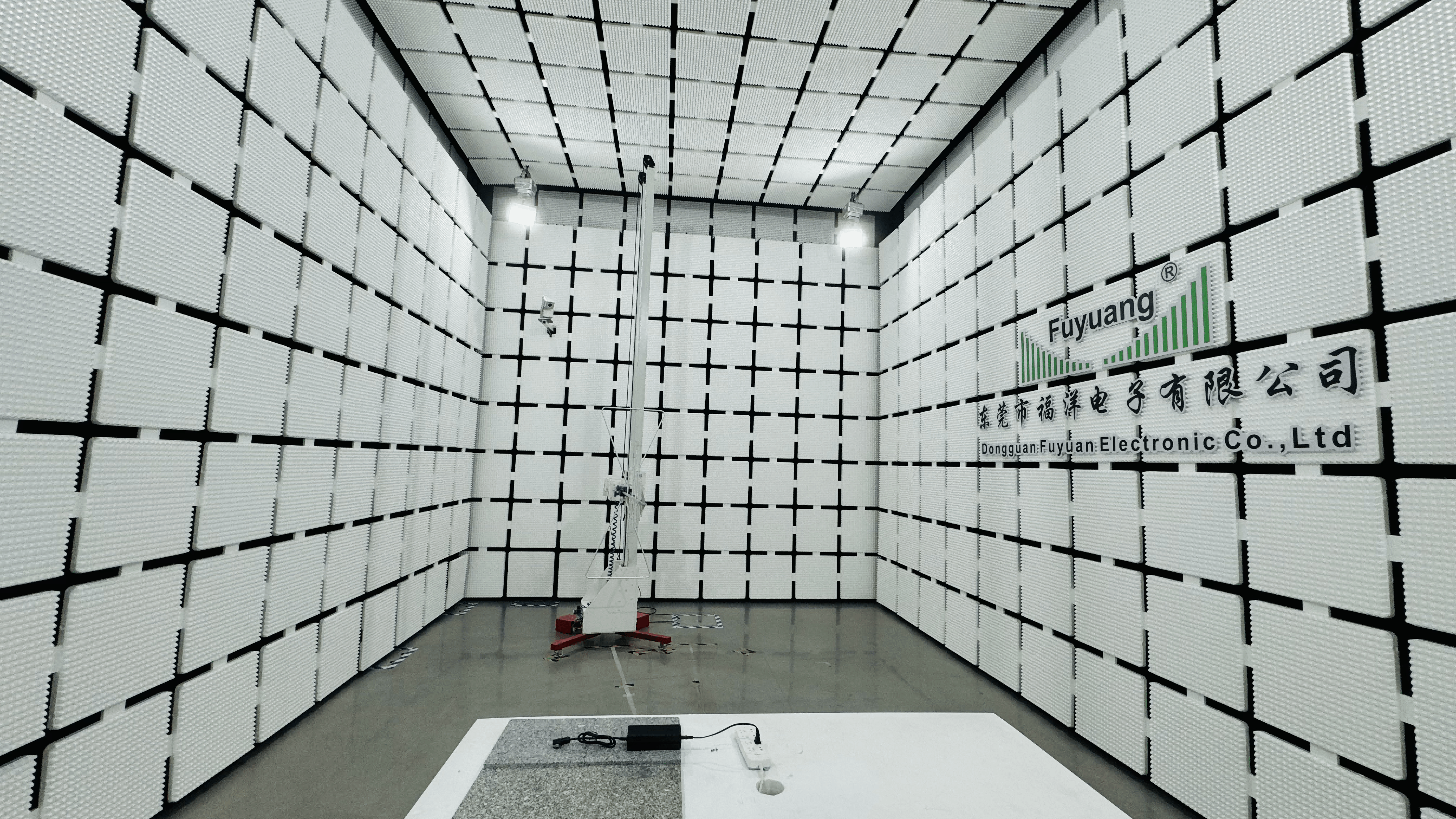
Fuyuan builds chargers across 60 W to 10 kW from more than 3,000 developed models, with a CNAS-standard in-house EMC laboratory, 100% factory inspection, a 4–8 hour full-load burn-in, MTBF rated at 30,000 hours or more, and a 3-year warranty. Custom projects start at 100 units, and design-to-engineering work can be completed in as little as 10 days.
A single-site restaurant needs one reliable dock and quick service access. A chain needs a repeatable configuration, documented certificate numbers for every market it operates in, and a spare-unit policy. A hotel or premium venue adds appearance and noise requirements. State the operating model in the RFQ and the specification follows from it.
Go into a delivery robot charging project with the fleet list, the service schedule and the dock location. Those three items decide the charging method, the power band and the enclosure rating far more reliably than a generic datasheet comparison. For reliable products and expert support, Fuyuan Electronic offers high-quality delivery robot chargers engineered for high-cycle food-service use.
A: Work backwards from the duty cycle. Identify the longest available charging gap, the pack capacity and the acceptable charge current, then choose the power band that finishes inside that gap. Fuyuan platforms span 60 W to 10 kW with 8–87 V DC outputs.
A: It can where alignment is difficult or appearance matters, accepting a longer charge time. Most commercial installations still rely on direct contact because losses are lower and the hardware is simpler to maintain throughout hundreds of daily cycles.
A: IP67 waterproof versions are available from 60 W to 3000 W in plastic or aluminium housings, which covers splash, spillage and wash-down zones in commercial kitchens.
A: Yes. A 160 W dual-output unit charges two packs on independent channels, and a 1000 W four-output model handles four, so a single cabinet can serve a small fleet.
A: MOQ is 100 units, with OEM/ODM support for output configuration, connector type, labelling and logo printing. Sample arrangements, payment terms and production lead times are confirmed by the sales team per project.


