Views: 0 Author: Site Editor Publish Time: 2026-04-03 Origin: Site


Spec sheets for delivery robot chargers look similar until a fleet has been running for a year. The differences that matter show up in dock reliability, pack life and how much of the day each robot is available — so it pays to evaluate a delivery robot charger against a fixed set of criteria rather than a brand shortlist.
The eight criteria below are the ones that separate a charger that suits high-cycle food-service work from one that merely meets the electrical minimum. They apply to any supplier, and each can be verified with documents or a bench test.
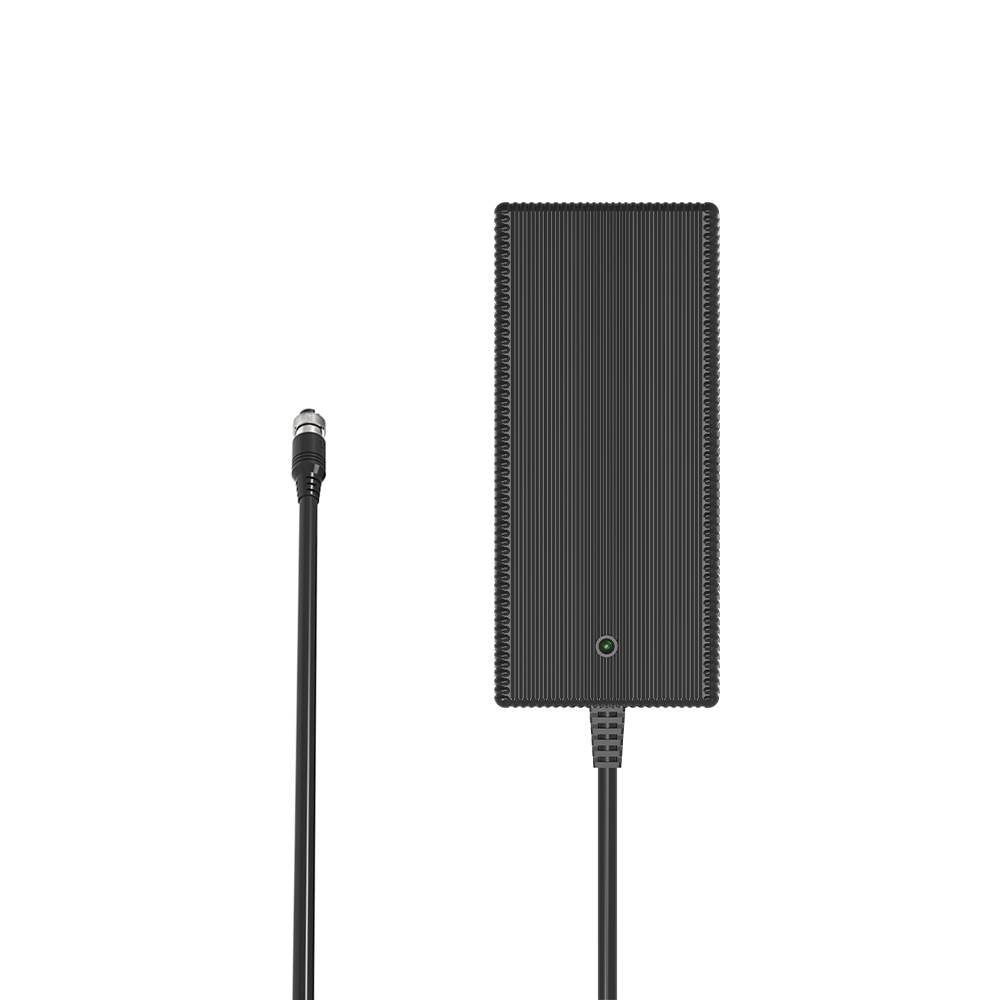
Voltage window and maximum current decide whether a charger can refill a pack inside the available gap. A wide output range reduces the number of variants a fleet needs to stock; Fuyuan platforms cover 8–87 V DC from 60 W to 10 kW across more than 3,000 developed models, with a 3000 W IP67 unit reaching 35 A. Check the constant-voltage point and current limit against the pack supplier's specification rather than the robot marketing sheet.
Constant-current/constant-voltage charging with tight regulation protects pack life. Where the robot uses a managed battery, the charger should follow the BMS limits rather than impose its own — that requires a documented protocol on both sides. Ask for the charge curve, not just the headline wattage.
Efficiency determines both running cost and how much heat is released into a warm kitchen. GaN/SiC platforms at 120 W, 240 W and 330 W convert at up to 95% efficiency, and free-air convection cooling removes the fan, its noise and its intake filter. Confirm the mounting clearance the design needs; fanless units rely on unobstructed airflow around the enclosure.
Tip: Run a full charge cycle in the crate before you judge efficiency. A charger that throttles after forty minutes will not deliver its rated current for the rest of the cycle.
Self-docking is standard in commercial service robots, so the interface has to survive hundreds of cycles per month without pitting or resistance build-up. Ask how the contacts are plated, how alignment is tolerated, and whether the docking assembly has been cycle-tested. For inductive designs, the practical questions are coil gap tolerance and the resulting charge time.
A charger that reports status is an asset; one that only lights an LED is a black box. CAN 2.0 or RS485 interfaces let a floor supervisor or fleet platform see voltage, current, temperature and faults, which supports scheduling and early fault detection. Decide the interface before ordering, because retrofitting a bus afterwards is expensive.
Match enclosure to room: plastic or aluminium housings for dry back-of-house areas, IP67 units where steam, spills or wash-down are routine. Fuyuan's waterproof range covers 60 W to 3000 W. Footprint matters too — a slim 120 W unit fits under counters where a bulky industrial brick does not.
Tip: Measure the dock location before the RFQ, including cable bend radius. Space, not wattage, rules out the most otherwise-suitable chargers.
Certificates should match the markets the robots sell into: UL, cUL, ETL, FCC for North America; CE (EMC and LVD), TUV-GS and CB for Europe; UKCA for the United Kingdom; PSE for Japan; KC and KCC for Korea; SAA and RCM for Australia and New Zealand; CCC for China; BIS for India; NOM for Mexico; RoHS and REACH for materials. Factory-side, look for ISO 9001, ISO 14001 and QC 080000 and for evidence of 100% factory inspection with a 4–8 hour full-load burn-in. Fuyuan pairs this with MTBF rated at 30,000 hours or more and a 3-year warranty. Verify certificate numbers on the issuing body's database rather than accepting a logo sheet.
Fleets rarely standardise on one robot model. The ability to adapt output parameters, connector type, protocol and housing keeps one charger platform usable across several robot families. Fuyuan offers OEM/ODM work with a 100-unit MOQ and design-to-engineering turnaround as fast as 10 days, supported by a CNAS-standard in-house EMC laboratory so compliance testing starts early. Spare-part availability and how quickly a replacement can ship are worth writing into the contract.
Tip: Score every candidate against the same eight criteria and keep the evidence attached. A written comparison makes the final decision defensible to operations as well as purchasing.
Delivery robot chargers should be judged on measurable behaviour: the charge curve inside the real duty cycle, thermal stability through a full cycle, dock cycle life, reporting interface and verifiable certificates. For reliable products and expert support, Fuyuan Electronic offers high-quality delivery robot chargers built for high-cycle commercial operation.
A: The charge curve against the real duty cycle. Confirm the constant-current phase finishes inside the shortest available charging window, then check voltage window, current limit and BMS compatibility.
A: No. Excess current beyond the pack supplier's limit shortens battery life, and an oversized unit running at partial load adds cost without reducing charge time. Size the charger to the pack and the schedule.
A: Ask for test reports rather than datasheet figures. Fuyuan supplies EMC and safety reports from its CNAS-standard in-house laboratory, plus records of 100% factory inspection and 4–8 hour full-load burn-in.
A: Those of the destination market: UL or ETL for North America, CE with a CB report for Europe, UKCA for the United Kingdom, PSE for Japan, KC for Korea, SAA and RCM for Australia and New Zealand, CCC for China, BIS for India and NOM for Mexico.
A: Output parameters, connector and interface selection, enclosure finish and labelling, starting at a 100-unit MOQ. Design-to-engineering work can take as little as 10 days; sample, payment and lead-time terms are confirmed by the sales team.


