Views: 0 Author: Site Editor Publish Time: 2026-07-02 Origin: Site


Chlorinated mist beside a pool, flour dust on a supermarket floor and an unheated garage in February ask three different things of the same charger, yet cleaning robots are sold into all three. Field returns on floor-care equipment tend to cluster around the charging interface and the power supply, which is why environment-specific design beats a generic indoor charger. A cleaning robot charger should be selected against the site it will live in, not against the robot alone.
Each cleaning environment attacks a different part of the charging system, and the fix for one is not the fix for another.
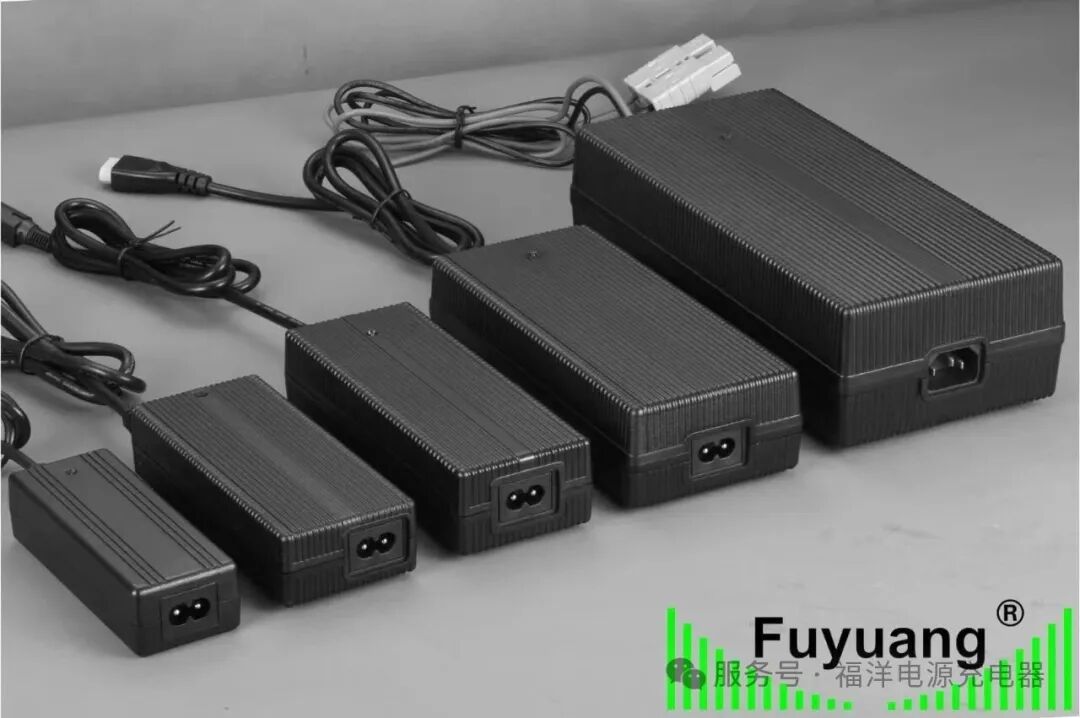
Water alone is manageable; water carrying chlorine and pool-treatment compounds is not. Aerosol from a pool surface deposits chloride on metal terminals and drives corrosion far faster than humidity does, and the corrosion products raise contact resistance until charging becomes intermittent. Enclosure materials matter as much as the seal — UV-stable, flame-retardant polycarbonate housings resist both sunlight and chemical attack, and thick gold plating on the terminals resists the chloride film that builds over a season.
Warehouse and supermarket floors are abrasive and fine-grained. Dust enters through any open vent, settles on the power stage and insulates it, so a charger that has been running cool for a year starts running hot. Two-layer intake grilles stop the heavy fraction while preserving airflow, and conformal coating on the circuit boards keeps conductive dust and oil films off the components they would otherwise bridge.
Domestic robots often charge in a garage or utility room that is barely above freezing. Cells accept charge more slowly when cold, and a charger that pushes full current regardless produces short charging, high internal resistance readings and pack failures that look like a battery problem. Wide-temperature circuits operate from -29 °C to +45.5 °C and store from -40 °C to +75 °C, with current tapered until cells are warm enough to accept it.
Tip: Map each deployment site before choosing a charger model. One product line rarely covers a pool deck, a distribution centre and a domestic garage without different sealing and programme settings.
An IP rating describes tested ingress protection, not indefinite survival. IP67 means dust cannot enter in quantity and temporary immersion at defined depth and duration does not cause harmful ingress — a specification that suits spray, dew, puddles and a hose splash, and does not promise continuous operation under water.
Construction is what delivers the rating. Ultrasonically welded housings, gasketed lids and full potting in high-temperature insulating silicone isolate the electronics from vapour and corrosive gas. Two practical points follow. First, sealing depends on the enclosure staying intact: a cracked case or a worn cable gland removes the protection even though the label still says IP67. Second, connectors are usually the weakest point, which is why output terminals and charge contacts get separate treatment — gold plating and sealed mating, rather than a rating on the label.
Tip: Add a visual check of housings and cable glands to routine maintenance. Most water damage in the field starts with a compromised seal, not a defective design.
Cleaning equipment spans a wide range of packs, from 2 Ah to 3 Ah Li-ion batteries in a domestic vacuum to 100 Ah lead-acid and LiFePO4 blocks in a ride-on scrubber. Voltage thresholds, finish behaviour and acceptable charge rates differ enough between chemistries that a single generic curve cannot serve all of them well.
Small packs are the vulnerable case. A charger sized for a commercial machine can push more current than a domestic pack should accept, which heats the cells and shortens cycle life. Current limits matched to pack capacity protect the small end of the range, and auto-cutoff at full charge prevents trickle heating when the robot sits on the dock overnight.
Larger scrubbers and industrial floor machines tend to use LiFePO4 packs for cycle life or flooded and AGM lead-acid for cost. Iron-phosphate packs need a different finish voltage and a longer constant-current phase, while lead-acid needs a staged profile that includes the absorption phase and temperature compensation. Keeping three distinct programmes — Li-ion, LiFePO4 and lead-acid — and applying the correct one per machine type avoids both under-charging and cell stress. Programmes for the iron-phosphate case are documented in the LiFePO4 battery charger range.
Tip: Specify a charge rate around 0.3C to 0.5C for packs that charge overnight. Faster rates are useful in shift-based operations, but only where the pack's BMS and thermal design support them.
Cleaning robots work in wet rooms, around pools and in public buildings, so the charger has to behave safely under abuse rather than only under normal load. Protection layers cover over-voltage, over-current, short circuit, overload, over-temperature, reverse polarity, anti-electrocution isolation and flame-retardant construction, with output cut immediately when an abnormal condition is detected. A timer function limits a charge cycle that would otherwise run indefinitely on a faulty pack.
Certification depends on the sales channel. Domestic models sold in China require CCC; export models are typically certified to UL, cUL, ETL, FCC, TUV-GS, CE (EMC & LVD), CB, PSE, SAA, RCM, UKCA, KC, KCC, NOM and BIS as applicable, with RoHS and REACH covering material compliance in the EU and UK.
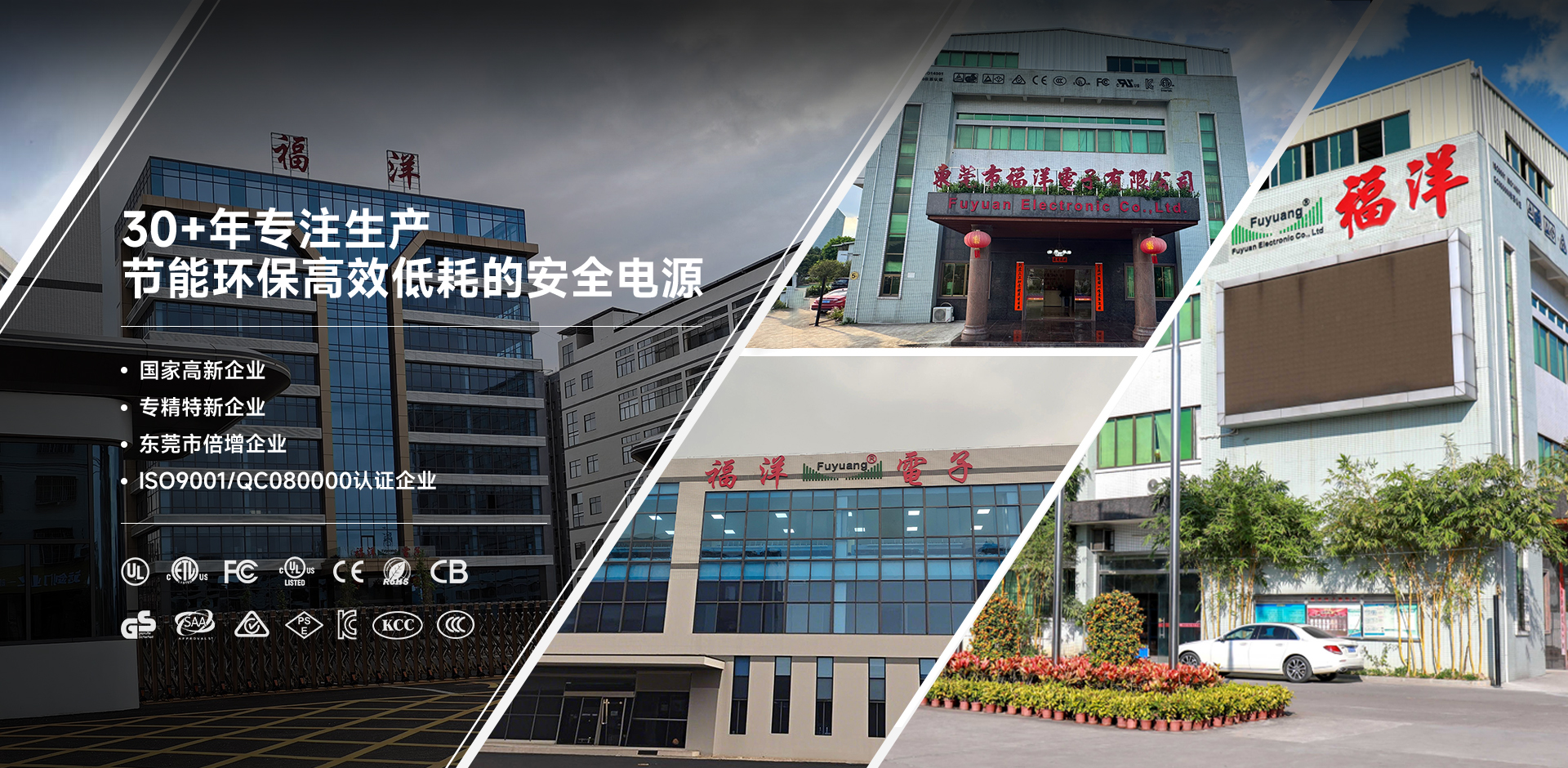
Cleaning robots pack their mechanics tightly, leaving little room for a docking charger. Enclosure shape, output terminal position and cable exit direction are all designable against the robot's own dimensions, and prototypes can be built before tooling is committed. Fuyuan runs these programmes from two production bases in Dongguan and Yongzhou, Hunan — 108,000 m² with 450 employees, ISO9001, ISO14001, QC080000 and BSCI certification, and a CNAS-standard EMC laboratory for pre-compliance testing. MOQ is 100 units, design-to-engineering turnaround can be as fast as 10 days, the wider range covers 60 W to 10 kW across 3,000+ developed models, and all chargers carry a 3-year warranty with MTBF ≥ 30,000 hours.
Tip: Include the dock position in the mechanical review. A charger that fits the bay but blocks the water tank still fails on the customer's floor.
Wet, dusty and cold sites each break chargers in different ways, and one generic indoor unit will not cover all three. Match the seal and housing material to the environment, plated contacts to the chemistry, current limits to the smallest pack in the fleet, and the charge programme to the battery type. For reliable products and expert support, Fuyuan Electronic offers high-quality cleaning robot chargers engineered for wet, dusty and low-temperature sites.
A: IP67 covers dust ingress and temporary immersion, which handles poolside spray and chlorine mist. Continuous submersion is outside that rating, so the dock should be positioned above splash level and housings and cable glands inspected during routine maintenance.
A: Cold cells accept current more slowly, so charge times lengthen in an unheated garage. Chargers in the range operate from -29 °C to +45.5 °C and taper current until the pack is warm enough to accept it, which protects cycle life at the cost of a longer cycle.
A: The hardware platform can, provided the charge programme is selectable and correctly set. The three chemistries use different finish voltages and absorption behaviour, so programmes are kept separate and applied per machine type.
A: Over-voltage, over-current, short circuit, overload, over-temperature, reverse polarity and anti-electrocution protection, plus flame-retardant construction, automatic cutoff at full charge and a timer limit. Output should cut immediately when an abnormal condition is detected.
A: Yes. Enclosure shape, terminal position and cable exit are designed against the robot's dimensions, with MOQ from 100 units and design-to-engineering turnaround as fast as 10 days.


