Views: 0 Author: Site Editor Publish Time: 2026-08-10 Origin: Site


Fuyuan Electronic has completed a smart-manufacturing upgrade at its industrial park in Ningyuan, Yongzhou (Hunan), adding fully automated assembly lines and a plant-wide MES production execution system. The two changes cover the whole chain from incoming material to finished-goods dispatch, and they matter to buyers for a simple reason: capacity, consistency and order visibility are the three things that decide whether a battery charger programme stays on schedule after the design is frozen.
The upgrade centres on several fully automatic assembly lines for power adapters and chargers, replacing the segmented manual approach the plant used before. The lines cover high-speed SMT placement, automatic insertion, automatic soldering, housing press-fit, cable assembly, full-load burn-in, appearance and vision inspection, and automatic packing. Repetitive operations that were previously manual are now handled by equipment.
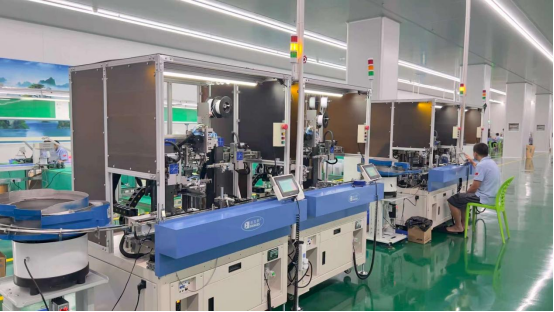
The automated lines are aimed at the company's standard high-volume items: LiFePO4 chargers, AGV industrial robot chargers, waterproof power supplies for mower robots, and e-bike chargers built to domestic standards. Continuous, untended runs cut production time per unit and, more importantly, remove the assembly defects that manual work introduces — cold solder joints, misaligned parts and under-torqued screws.
Industrial high-power robot chargers are the hardest items to hold consistent, because component placement, heat-sink assembly and sealing gasket fit all affect the finished result. Automated stations handle those steps, and inline temperature monitoring plus current and voltage sampling screen semi-finished units as they move down the line. Faulty units are diverted early, which reduces rework loss and lifts the overall first-pass yield.
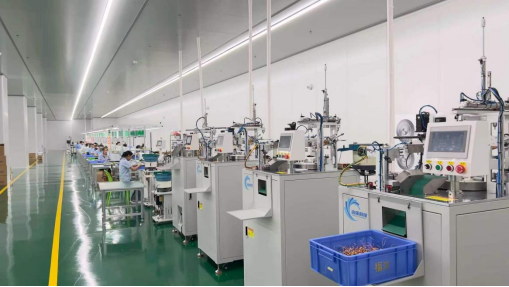
Tip: When you audit a charger factory, walk the line rather than the showroom. Inline inspection points and the way failed units are pulled tell you more about batch consistency than any yield figure on a slide.
If the automated lines are the hardware side of the upgrade, the MES layer is the control side. It runs across every workshop in the park and connects order release, materials warehousing, process flow, equipment maintenance, quality records and outbound shipping into one data chain, so production status can be queried, controlled and traced.
When a custom charger order arrives from an overseas customer or a machine builder, the system breaks down the bill of materials, sends picking instructions to the warehouse and schedules the line. Standard volume batches and small customized batches are separated, which prevents the scheduling confusion, material pile-up and stoppages that follow a mixed-mix plan. It also shortens sample and delivery cycles for multi-specification work such as AGV chargers or GaN fast-charging supplies for humanoid robots.
Test results for each unit — burn-in duration, dielectric strength testing, insulation performance, EMC immunity results — are recorded in the system as the unit moves through the process. If a unit fails, the system flags the station, operator and equipment number, which makes root-cause analysis fast. A customer service request can be traced back with the product serial number, which is also what makes a closed-loop traceability record useful during the supplier audits common in North American and European procurement.
The same system collects live status from the automated lines, burn-in loads and thermal test chambers, so wear and failure risk can be predicted and maintenance scheduled before a breakdown interrupts a run. Electricity and water consumption and line utilization are tracked in parallel, which supports more efficient shift planning and lower energy use per unit.
Tip: Ask for a sample traceability record during supplier qualification. If a vendor can pull up the test history of a specific serial number, its quality system is real rather than documentary.
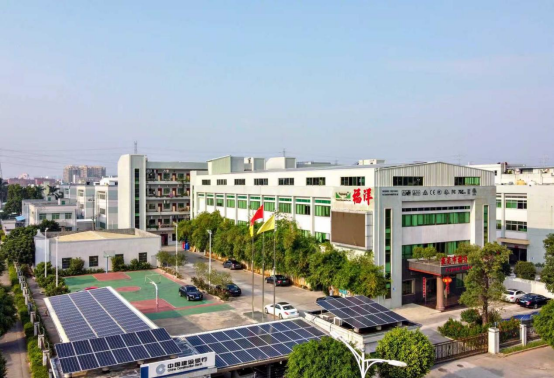
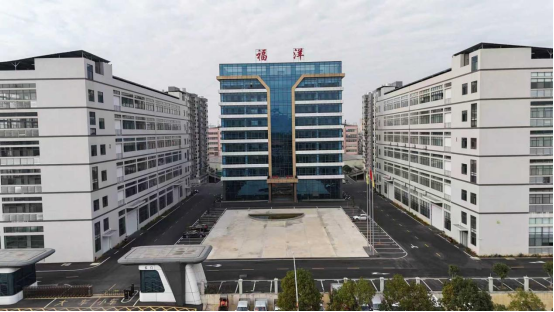
Fuyuan operates two bases with a deliberate division of labour. Dongguan handles research and development, sample development, technical liaison and market support; the Hunan industrial park in Ningyuan takes on high-volume production. After this upgrade, the volume site can run full-category output — AGV LiFePO4 chargers, mower robot chargers, IP67 chargers for pool-cleaning robots, high-power drone fast chargers, chargers for delivery, patrol and disinfection robots, mid-range and high-end e-bike chargers, cross-border compliant e-scooter adapters, and lead-acid or NiMH charging equipment.
Units leave the line against the same safety standards, with certifications including CCC, UL, UKCA, PSE and SAA available depending on the model and destination market. The practical effect for a buyer is flexibility: the plant can absorb standard orders in large volumes while still responding to small, multi-specification design changes from robot manufacturers. Because the MES record follows each unit, the 3-year warranty is settled against production history rather than a claim form.
Smart manufacturing is not a marketing layer here so much as an operating requirement. Order volume swings, batch-to-batch variation and complex customization are the long-standing problems of power-supply manufacturing, and automated hardware plus manufacturing software is the company's answer to all three.
Tip: Split your sourcing questions between the two bases: technical and customization questions belong with the Dongguan team, capacity and scheduling questions with the volume plant. You will get faster, more accurate answers.
The Hunan upgrade gives Fuyuan Electronic automated assembly, full-process traceability and clearer production scheduling across a catalogue that spans battery chargers, power adapters and LED drivers. Combined with the Dongguan R&D base, two plants and 108,000 m² of floor space support a 60W–10KW range and more than 3,000 developed models. For reliable products and expert support, Fuyuan Electronic offers high-quality chargers and power adapters engineered for continuous duty, produced under ISO9001, ISO14001 and QC080000 systems.
A: Fuyuan added several fully automatic assembly lines covering SMT placement, insertion, soldering, housing press-fit, cable assembly, burn-in and vision inspection, and deployed an MES system across all workshops in the industrial park in Ningyuan, Yongzhou.
A: It links order release, BOM breakdown, warehousing, process flow, quality records and shipping data. For buyers, the visible results are tighter scheduling on mixed order types, test data stored against each serial number, and faster root-cause analysis when a unit fails.
A: Standard high-volume items including LiFePO4 chargers, AGV industrial robot chargers, waterproof power supplies for mower robots and e-bike chargers, along with other battery charger and power adapter models in the catalogue.
A: Dongguan focuses on research and development, samples, technical liaison and market support. The Hunan industrial park in Ningyuan handles high-volume manufacturing. Together they cover 108,000 m² with 450 employees.
A: Yes. Production history, including burn-in duration and test results, can be retrieved by product serial number to support customer service verification and buyer audits.


